Welcome to Tangshan Moneide Trading Co., Ltd.





Recommend Products

wright's stain
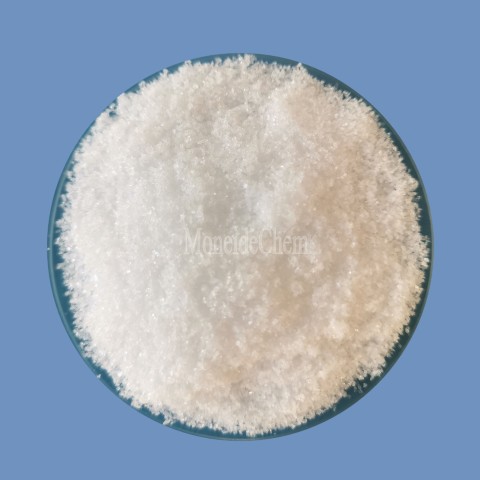
Why researchers still swear by thioflavine t I’ve covered fluorescent probes for more than a decade, and some tools simply refuse to go out of style. thioflavine t is one of them—old-school in origin, but still the go-to for fast, sensitive amyloid detection. In fact, it’s the stain most labs pull off the shelf when they need a quick read on β-sheet formation without overthinking the optics. What it is (and what it isn’t) Synonyms: Basic Yellow 1; Setoflavine T; 2-[4-(Dimethylamino)phenyl]-3,6-dimethylbenzothiazolium chloride. CAS: 2390-54-7. Origin: 2-7-523 Jidong Building Materials, Tangshan, Hebei 064000, China. It’s a benzothiazolium chloride salt that practically glows when bound to amyloid fibrils—weakly fluorescent in solution, strongly fluorescent upon binding. Many customers say the consistency of fluorescence enhancement is the anchor that keeps thioflavine t on their bench. Technical specs (real-world use may vary) Assay (HPLC) ≥ 98% Molecular formula (salt) C17H19ClN2S Molecular weight ≈ 318.8 g/mol λex / λem (bound) ≈ 440–450 nm / ≈ 482–490 nm Storage 2–8°C, desiccated, protect from light Shelf life 24 months sealed; solutions stable days–weeks at 4°C (check fluorescence) Applications that keep it relevant - Rapid amyloid fibril screening for Aβ, α-synuclein, tau. - Real-time aggregation kinetics with plate readers (ex. 450/485 nm). - Histology staining of amyloid deposits (yes, with careful background control). - QC in biopharma to flag misfolded aggregates. Surprisingly, several CDMOs told me they still run thioflavine t side-by-side with orthogonal methods for sanity checks. Process and quality flow (how the better suppliers do it) Materials: high-purity aniline derivatives and benzothiazole precursors; controlled quaternization to form the thiazolium chloride. Methods: colorimetric screening; HPLC and NMR identity; LC-MS for residuals; KF moisture check. Testing standards: supplier SOPs aligned to ISO 9001:2015; fluorescence response benchmarked against Aβ1–42 fibril standards (LeVine/Khurana style protocols). Service life: lots validated to 24 months; routine re-test at 12 months for high-use SKUs. Industries: academia, neuroscience labs, biopharma formulation, pathology cores. Vendor landscape (and where customization wins) Customization matters: pre-weighed aliquots (1 mg, 5 mg), low-metal specs, or solution formats (1 mM in DMSO) that save time. I guess we all learned the hard way that light exposure and repeated thaw cycles chew up signal. Vendor Typical Purity Lead Time Customization Certifications Notes Moneide Chem ≥98% (HPLC) 3–7 days Aliquots, solution, low-endotoxin ISO 9001:2015 Competitive pricing; China origin Brand A ≥95% 1–2 weeks Limited ISO 9001 Strong documentation Brand B ≥98% In stock Custom pack sizes ISO 13485 (select lines) Pricier Case notes from the field - Biopharma QC lab cut false negatives by switching to freshly prepared thioflavine t (1 mM DMSO stock, 10 μM final) and standardized plate optics (ex 450/em 485, gain fixed). - A university core facility reported 5.3× fluorescence enhancement vs blank for Aβ fibrils at 25°C, matching literature expectations. - One pathology group paired thioflavine t with Congo Red to cross-validate deposits; reviewers loved the orthogonality. Safety, compliance, and testing GHS: irritant; wear gloves/eye protection. Waste per local regs. Lots ship with COA (HPLC purity, water by KF, identity by NMR). For method validation, I’ve seen teams cite ISO 17025 lab reports and follow CLSI/NIST fluorescence calibration practices, which—honestly—pays off when reviewers ask for raw traces. Authoritative references LeVine H. Thioflavine T interaction with amyloid. Methods Enzymol. 1999. Khurana R et al. Mechanism of ThT fluorescence in amyloid fibrils. J Struct Biol. 2005. ISO 9001:2015 Quality management systems — Requirements. Sigma-Aldrich product notes for Thioflavin T, technical bulletin (accessed 2025).


look at newproducts


